

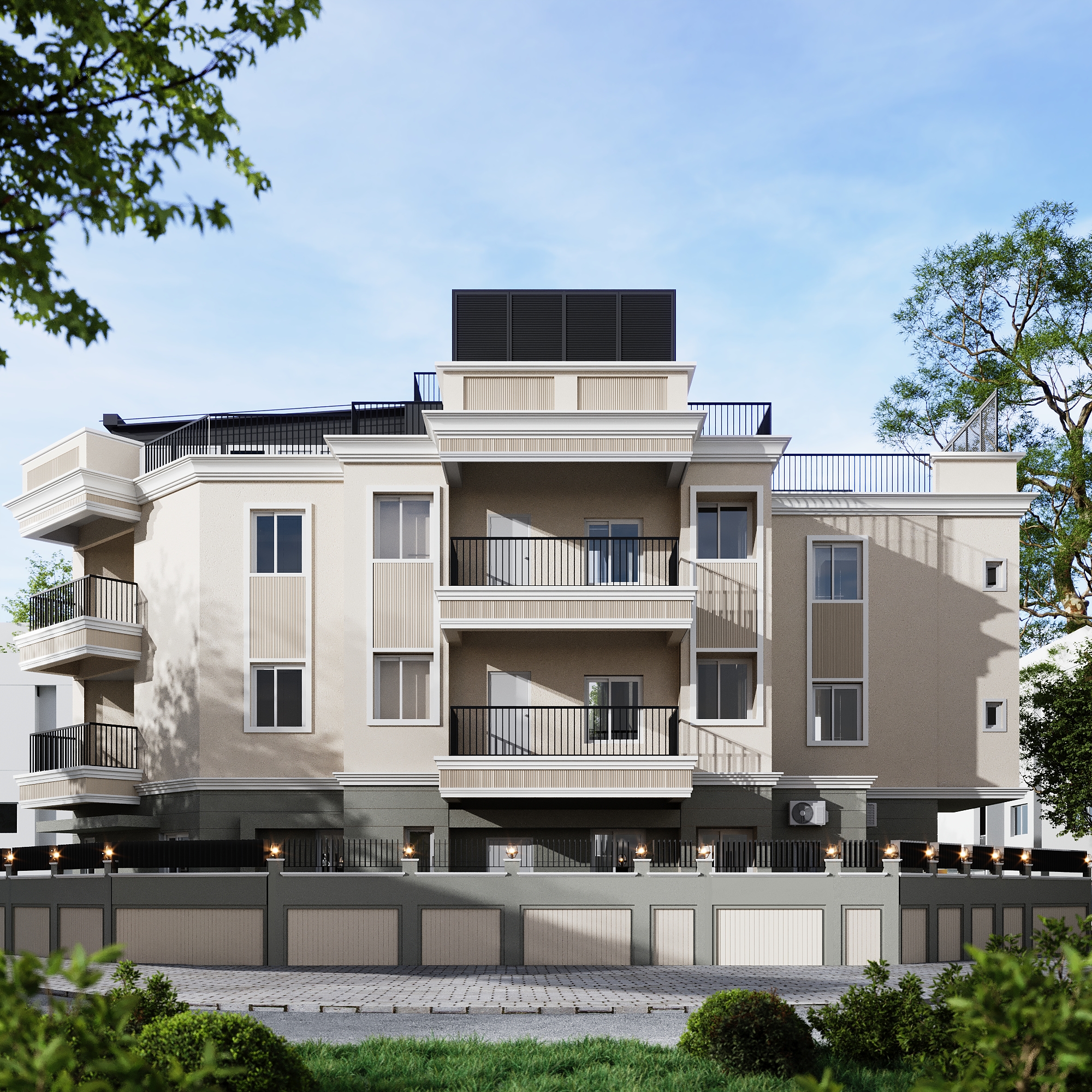

Many homeowners approach us with a simple request: they want advice on improving the appearance of their facade.
“We want the house to look more modern.”
Fair enough.
The façade is the face of your home. It’s the first thing people notice and often the first thing you stop noticing yourself—until one day it starts feeling dated, tired, or disconnected from who you are today.
But here’s something we often explain during our first meeting: a successful facade renovation isn’t really about colours, textures, or decorative features.
It’s about understanding what the building can become.
Every residential facade design project involves balancing appearance, climate performance, maintenance, structural realities, and budget. The homes that age gracefully aren’t necessarily the ones with the most expensive materials. They’re the ones where every design decision works together.
Before we sketch a single line, we evaluate five key factors. They shape every façade renovation we undertake, regardless of project size.
Why a Facade Renovation Is More Than a Cosmetic Upgrade
A façade does much more than create kerb appeal.
It influences how your home responds to weather, how much maintenance it requires, and how people perceive its value. In many cases, a thoughtful facade redesign can dramatically improve the character of an existing building without changing its floor plan at all.
We’ve seen homes gain a stronger identity simply by correcting proportions, refining material choices, and introducing better shading solutions.
The challenge isn’t making a home look different.
The challenge is making it look right.
That’s where these five considerations come into play.
1. Site Context and Climate
No façade exists in isolation.
A design that works beautifully in a dry climate may perform terribly in a city that experiences heavy rainfall, humidity, pollution, and intense sunlight.
When assessing a façade renovation, we study:
- Sun exposure throughout the day
- Prevailing wind direction
- Rainfall patterns
- Dust accumulation
- Neighbourhood context – Road proximity
- Privacy requirements
In Kolkata, façades often receive intense afternoon heat. In such situations, we frequently explore deeper balconies, vertical fins, perforated screens, or recessed openings to reduce solar gain.
Rather than enlarging windows as initially requested by the homeowner in one our projects, we introduced a combination of shading devices and layered screens. The result was a façade that looked more contemporary while actually improving indoor comfort.
Good residential facade design responds to climate first and aesthetics second.
The best-looking solution is usually the one that solves multiple problems at once.
2. Getting the Proportions Right
If climate is the science of a façade, proportion is the art.
Many older homes suffer from a common issue: visual imbalance.
Perhaps the windows are too small. Maybe the balcony projections feel heavy. Sometimes multiple additions over the years create a patchwork appearance that lacks cohesion.
When we begin a facade redesign, we analyse:
- Window-to-wall ratios
- Horizontal versus vertical emphasis
- Visual weight distribution
- Building height perception
- Balcony proportions
Interestingly, proportion often has a greater impact than materials.
Three levels we follow:
– Base
– Body
– Crown
We’ve worked on projects where replacing paint with stone made almost no difference visually. Yet introducing a stronger vertical rhythm completely transformed how the building was perceived.
Think of it like tailoring a suit.
The fabric matters, but the fit matters more.
Even simple interventions such as aligning openings, extending architectural lines, or creating a stronger visual hierarchy can dramatically elevate the appearance of a home.
3. Material Selection and Long-Term Maintenance of a Facade
This is where design aspirations meet reality.
Every material looks great on installation day.
The real question is how it performs five years later.
When selecting materials for a facade renovation, we evaluate:
- Durability
- Weather resistance
- Cleaning requirements
- Repairability
- Replacement cost
- Long-term appearance
In one project, the client initially preferred extensive timber cladding. While visually appealing, the maintenance commitment didn’t align with their lifestyle. We eventually developed a material palette combining stone textures and weather-resistant GRC finishes that achieved a similar warmth with significantly lower upkeep.
Good design should fit the owner’s lifestyle—not just their Pinterest board.
4. Structural Stability and Intervention Possibilities
Every great façade idea must pass one important test:
Can the building actually support it?
Before proposing any major intervention, we assess the structural condition of the existing building.
Key questions include:
- What is the condition of the structure?
- Are there load-bearing walls involved?
- Can new projections be added safely?
- Can cladding systems be anchored appropriately?
- Does retrofitting require additional reinforcement?
Homeowners are often surprised by how much structural considerations influence design decisions.
For example, adding a dramatic floating feature or extended cantilever may look impressive in a rendering, but the existing structure may not have sufficient capacity to support the additional load.
On a recent renovation project, the client’s preferred concept involved a substantial projecting moulding around the building frontage. After structural review, we refined the proposal into a lighter steel-supported GRC moulding feature that achieved a similar visual impact while remaining structurally responsible.
Good architecture isn’t about forcing an idea onto a building.
It’s about finding the smartest way to work with what already exists.
5. Integrating Existing Services Into the Design
This is one of the most overlooked aspects of residential facade design.
Every building contains systems that need to function:
- Air-conditioning units
- Drainage pipes
- Electrical conduits
- Service access points
- Water storage infrastructure
Unfortunately, many façade renovations treat these elements as afterthoughts.
The result?
Beautiful renderings followed by visible pipes, exposed wiring, and awkward equipment placements during construction.
We prefer a different approach.
We integrate services into the design process from the beginning.
In one residential project, we designed custom screening elements that concealed outdoor AC units while maintaining airflow requirements. The screens became a defining architectural feature rather than an attempt to hide a problem.
The most successful façades acknowledge reality rather than pretending it doesn’t exist.
What Most Homeowners Overlook During a Facade Renovation
Over the years, we’ve noticed a few recurring blind spots.
Homeowners naturally focus on appearance, but long-term performance often determines whether a renovation remains successful.
Some commonly overlooked considerations include:
- Future maintenance access
- Rainwater management
- Material ageing
- Cleaning requirements
- Serviceability
- Expansion possibilities
- Hidden structural costs
A façade should not only look impressive on completion day.
It should continue performing effectively for years to come.
That’s why we encourage clients to evaluate decisions over a ten-year horizon rather than a ten-week construction timeline.
Closing Thoughts
A successful facade renovation is rarely the result of a single dramatic design move.
Instead, it emerges from hundreds of thoughtful decisions working together.
At Vivid Concept, every residential facade design project begins with understanding five fundamental factors:
- Site context and climate
- Building proportions
- Material performance and maintenance
- Structural possibilities and limitations
- Service integration
When these elements align, the result is more than a visual upgrade. The home performs better, ages better, and feels more connected to the people who live in it.
The best façades aren’t simply attractive.
They’re intelligent responses to the realities of the building beneath them.
Thinking about transforming the appearance of your home?
At Vivid Concept, we approach every facade renovation through a balance of design, performance, and practicality—creating homes that look better, function better, and age gracefully.